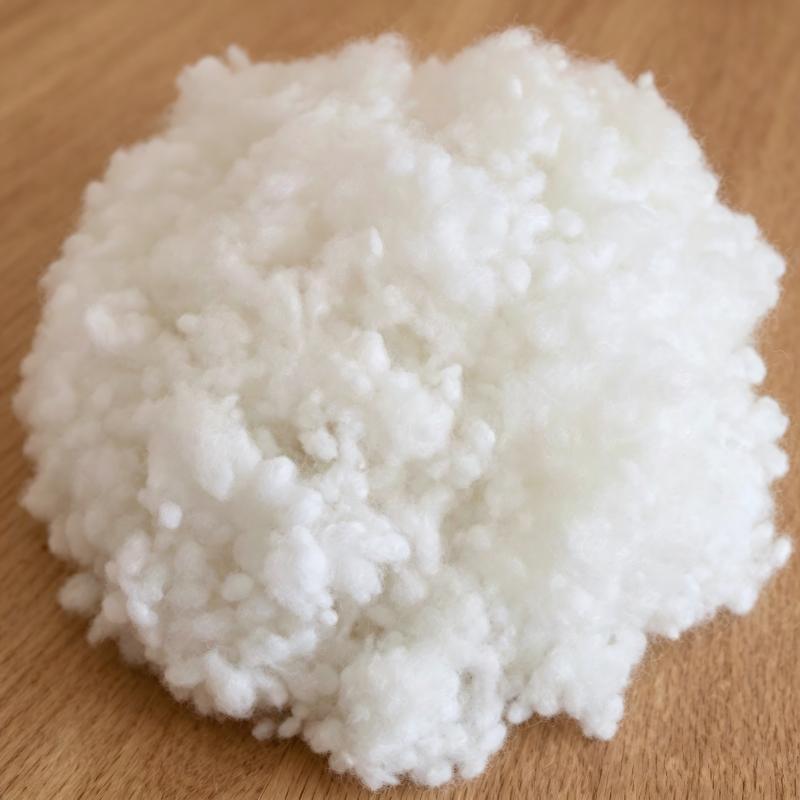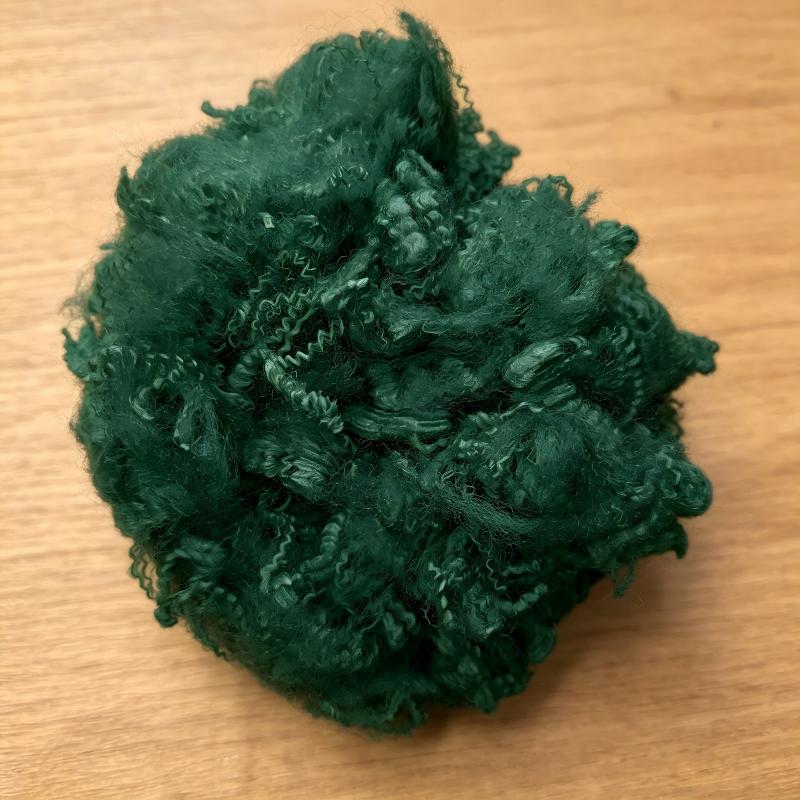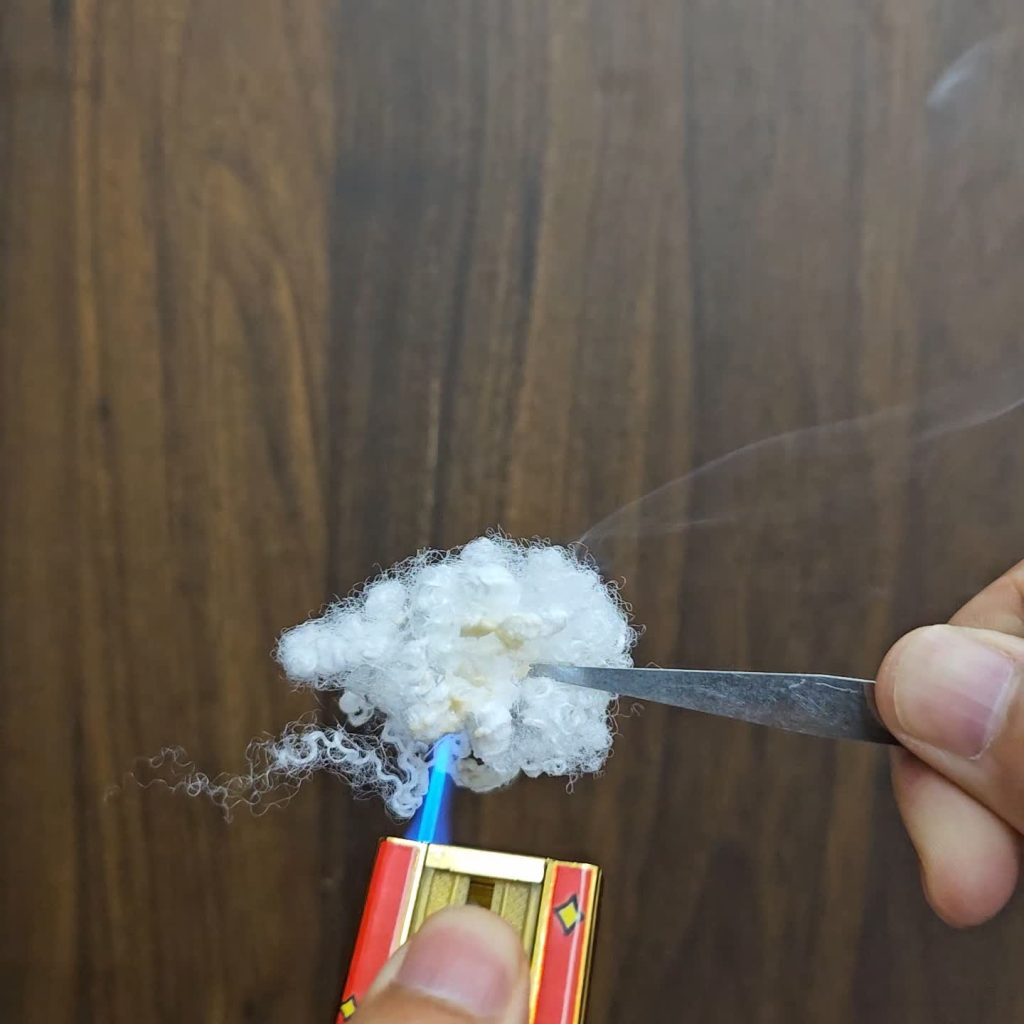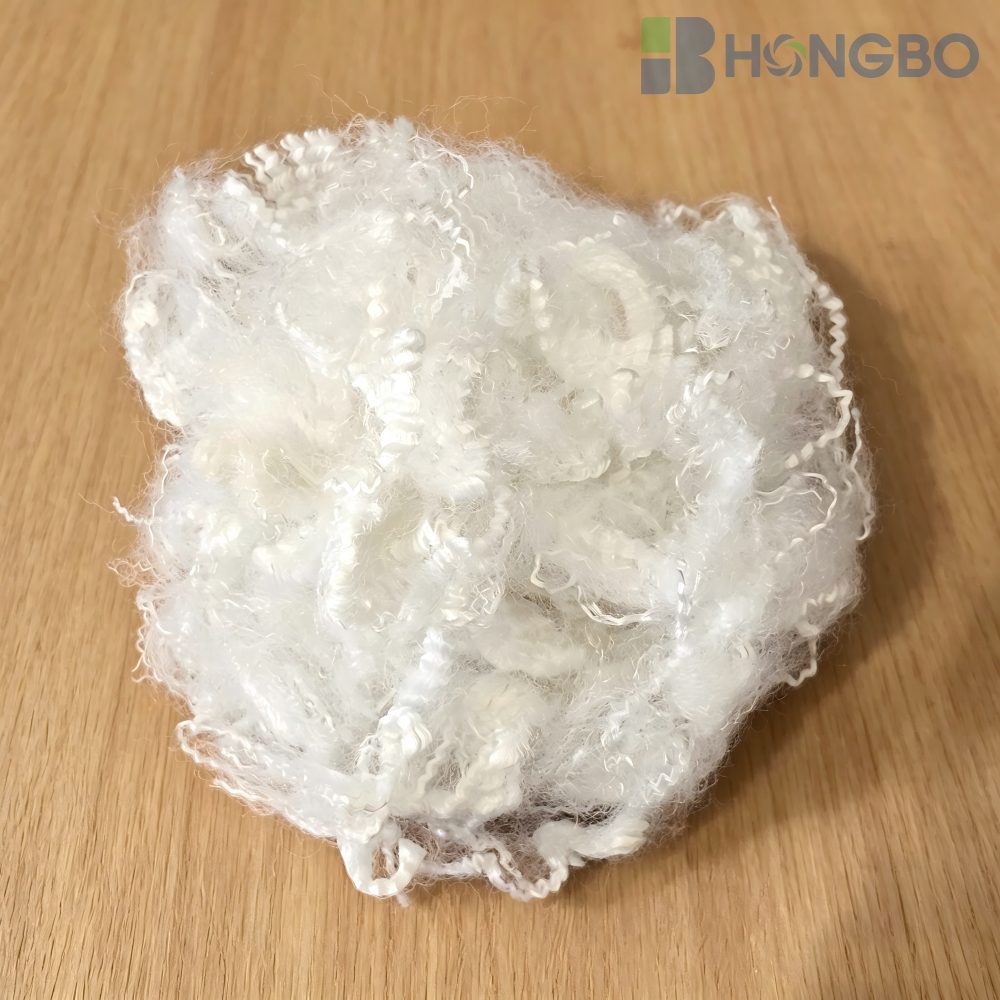
Low Melting Point Polyester Staple Fiber (LMPET) (typically featuring melting points of 110°C, 130°C, or 180°C) stands as the industry’s premier hot-melt adhesive fiber. Most commonly utilizing a sheath-core composite structure (low-melting-point copolyester sheath enveloping a conventional PET core), it seamlessly blends the high structural strength and aging resistance of polyester with superior thermal bonding functionality.
Core Application Areas of LMPET
1
Hygiene Products (Major Nonwoven Segment, >50% Volume)
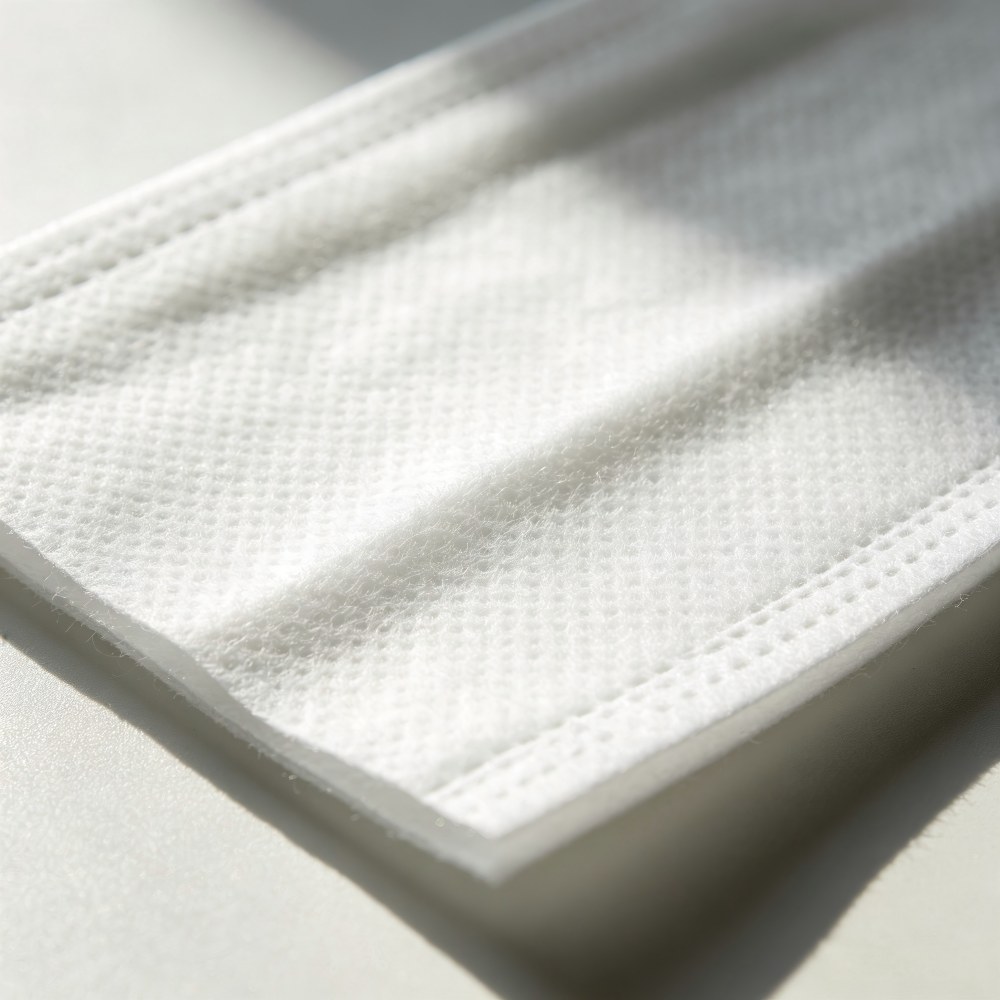
- Through-Air Bonded Nonwovens: Blended with standard polyester or ES fibers. The sheath melts at 130–140°C in hot air to yield ultra-soft, fluffy, premium sanitary layers (e.g., feminine hygiene top sheets, diaper waistbands, wet wipe substrates). Specs: 2.0–4.4 dtex × 38–51 mm; blending ratio 15–30%.
- Thermal Calendered Nonwovens: Deployed in high-strength surface sheets for medical and personal hygiene goods.
- The Advantage: Outperforms PE/PP low-melt options by providing a wider processing window and a final touch reminiscent of natural fibers.
2
Automotive Interiors (Structural Composites, 130–180°C)
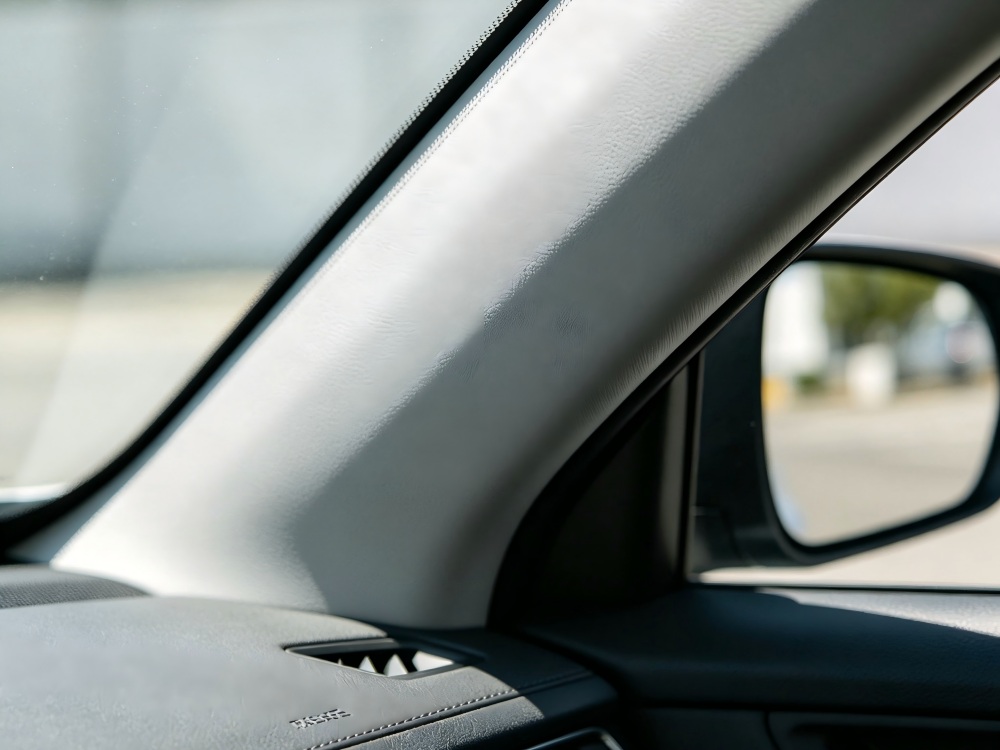
- Headliners & Pillar Trims (A/B/C): Blended with matrix fibers (PET, fiberglass, or natural hemp) and molded at 180–200°C. Replaces toxic phenolic resins/latex, yielding near-zero VOC emissions for cleaner in-cabin air quality.
- Door & Trunk Panels: Provides reliable acoustic insulation, interlayer bonding, and lightweight rigidity.
- Seat Cushion Core: Thermally bonded with 3D hollow conjugate polyester to prevent structural collapse over time.
3
Filtration Materials (Dimensional Stability)
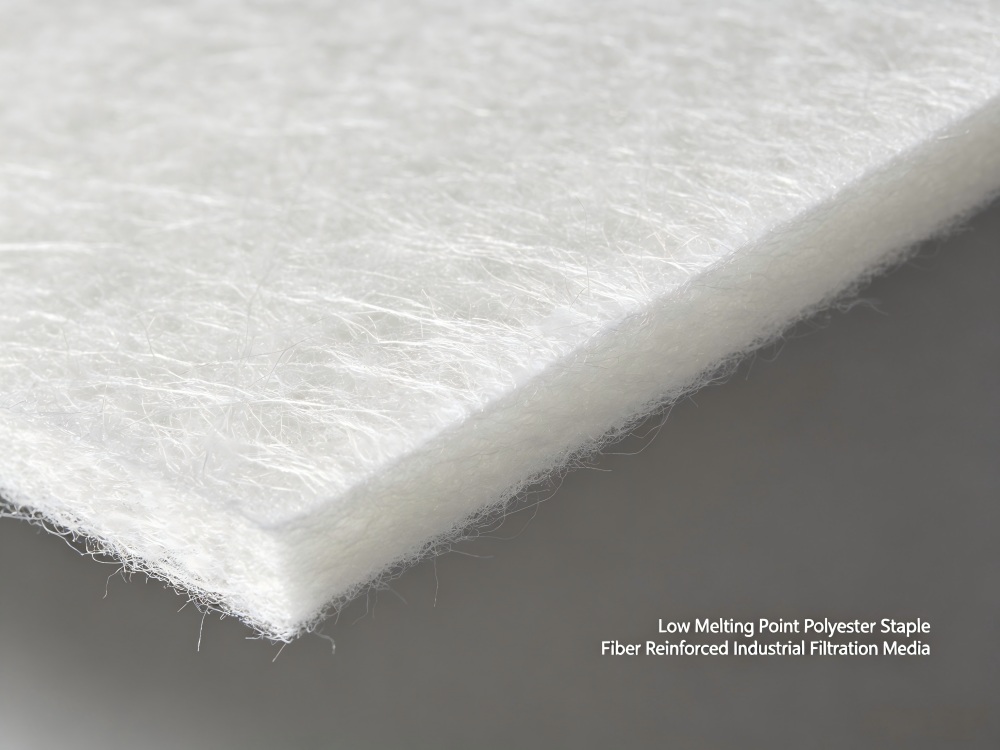
- Air Filtration: Used at 110–130°C in needle-punched or spunlace felts for baghouse dust collectors and HVAC filters. Melts at fiber intersections to create “weld points,” maximizing peel strength.
- Liquid Filtration: Acts as an inert bonding support layer for food/beverage and industrial separation fabrics.
- Chemical Edge: Superior acid and oxidizer resistance compared to polyolefin-based alternatives.
4
Construction & Geotextiles
- Asphalt Waterproofing: Hot-rolled (110–130°C) with fiberglass mesh or polyester filaments to anchor modified asphalt membranes, eliminating site slippage.
- Insulation Systems: Stabilizes and shapes rock wool, glass wool, and reinforcing nonwovens bound to XPS/EPS foam boards.
5
Home Textiles & Furniture (Eco-friendly Hard Cotton)
- Mattress Cores: Oven-bonded with 3D crimped hollow PET to form breathable, formaldehyde-free, highly elastic padding—entirely replacing toxic chemical spray-bonded glues.
- Bedding & Carpets: Eliminates clumping/fiber migration in duvets; secures backings in tufted carpets.
6
Specialty Paper & Synthetic Leather
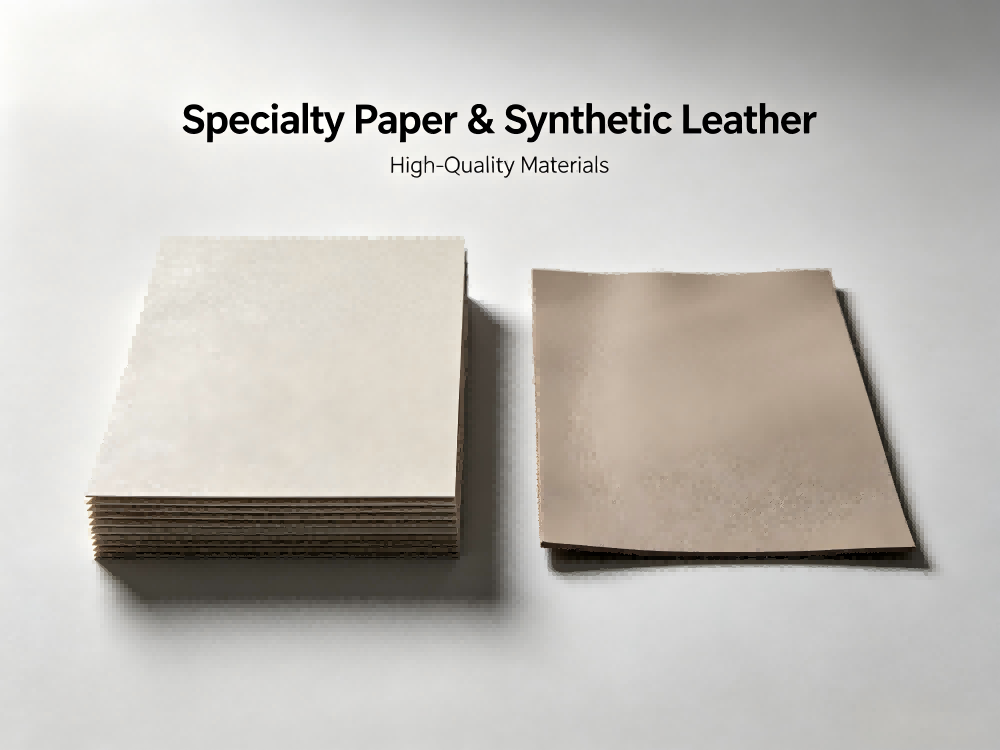
- Pulp Reinforcement: Precision-chopped to 3–6 mm to enhance wet strength and tear resistance in tea bags, coffee filters, and battery separators.
- Synthetic Leather: Enhances interlayer integration for microfiber synthetic leather base fabrics.
7
Apparel Accessories & Shoe Materials
- Fusible Interlinings: Used for crisp collars and armhole support matrices.
- Anti-Migration Wadding: Stabilizes insulation blankets in performance outerwear to halt down feather leakage.
8
Other Specialized Fields
- Cable Wrapping & Grinding Elements: Heat-sealing nonwoven cable tapes and setting matrix profiles for heavy-duty industrial polishing wheels.
Selection Guide by Melting Point
| Melting Range | Processing Temp | Processes | Target Applications |
|---|---|---|---|
| Low Melt | 110 – 120°C | Hot Air, Low-Temp Calendering | Hygiene stock, apparel linings, polyolefin fiber blends |
| Medium Melt | 130 – 140°C | Through-Air, Calendering | Home textile structural cotton, filters, automotive interior trim |
| High Melt | 170 – 180°C | Compression Molding, Ovens | Automotive headliners, structural hard panels, fiberglass/hemp matrices |
📈 Strategic Technical Advantages
Unlike nylon or low-melt polyolefins (PE/PP), LMPET provides uncompromised chemical compatibility with standard polyester matrices—delivering unrivaled interfacial bonding power. Coupled with the ability to easily withstand downstream processing over 140°C and premium UV/light aging resistance, it remains the ultimate binder choice for high-tier polyester composite engineering.